



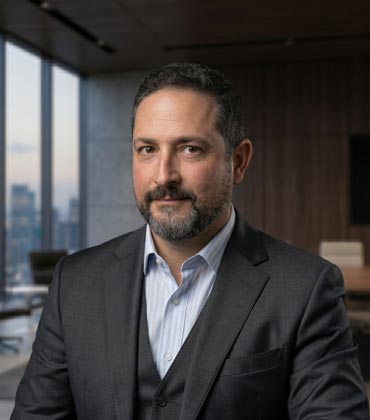
 Diego Tejedo, Founder & CEO
In Mexico, this shift is especially relevant. The country is going through a period of major opportunity. Nearshoring, manufacturing expansion, international investment, supply chain redesign and the growing sophistication of Mexican companies are all increasing the demand for stronger executive talent. Companies do not only need people who can manage. They need leaders who can make decisions in uncertain environments, build trust across cultures, professionalize organizations and execute with speed.
This is where executive recruitment must evolve.
For many years, recruitment was treated as a process of finding candidates who matched a job description. Today, that is no longer enough. A job description rarely captures the full complexity of a leadership role. It may describe responsibilities, reporting lines and technical requirements, but it does not always explain the real business problem behind the hire.
A company may say it needs a general director, a CFO, a plant manager or a commercial director. But the real question is deeper: What must this person transform? What risk must this person reduce? What kind of culture will this leader enter? What level of maturity does the organization need? What would make this hire fail?
Those questions matter more than ever.
In the Mexican market, one of the greatest challenges is that many companies are operating in transition. Family businesses are professionalizing. Multinational companies are expanding operations. Manufacturing groups are adapting to new supply chain demands. Retail and consumer companies are facing pressure for speed and efficiency. Technology is changing how decisions are made. In all these cases, leadership is not a formality; it is leverage.
A wrong executive hire can cost much more than money. It can affect culture, trust, execution, credibility and momentum. A right hire can accelerate growth, bring order, improve decision-making and open a new chapter for the business.
That is why the future of executive recruitment will not belong to firms that simply “send candidates.” It will belong to firms that help companies make better leadership decisions.
Technology has an important role in this evolution. Artificial intelligence can help map markets faster, organize information, compare profiles, identify patterns and structure evidence. It can support sourcing, scoring, interview design, compensation benchmarking and candidate analysis. Used correctly, AI makes the process more disciplined and more transparent.
But technology alone is not enough.
Executive hiring is still profoundly human. A candidate’s resume cannot fully explain judgment, maturity, ambition, resilience, loyalty, emotional intelligence or cultural sensitivity. A system can identify information, but it cannot fully understand context. It can help structure a decision, but it should not replace the human responsibility behind that decision.
-
The future of executive recruitment is not about filling vacancies faster. It is about helping companies make leadership decisions with more clarity, less risk and greater responsibility.
The best recruitment model is not artificial intelligence versus human intelligence. It is artificial intelligence combined with experienced human judgment.
At Humaniq, we see technology as an intelligence layer, not as a substitute for consultants. Our role is still to understand the client, challenge assumptions, interpret the market, evaluate candidates deeply and protect the quality of the decision. AI helps us see more clearly, but the responsibility remains human.
This is particularly important in Mexico, where cultural fit is often misunderstood. Cultural fit does not mean hiring someone who is similar to the company’s current leadership team. It does not mean choosing the candidate who creates the best first impression. True cultural and leadership fit means understanding whether a person can perform in a specific environment, with a specific team, under specific business conditions.
For example, hiring for a family-owned company requires a different lens than hiring for a multinational corporation. In a family business, trust, emotional intelligence, respect for legacy and the ability to professionalize without creating unnecessary friction can be as important as technical expertise. In a multinational, reporting discipline, governance, stakeholder management and cross-cultural communication may be decisive. In manufacturing, execution, labor relations, productivity and operational discipline may define success.
This is why executive recruitment must become more contextual.
One of the most important trends we see is the rise of decision intelligence in hiring. Companies are asking for more than intuition. They want structured interviews, evidence-based evaluation, psychometrics, market mapping, leadership indicators and clearer comparisons between finalists. They want speed, but not at the cost of quality. They want data, but not without interpretation.
The opportunity for executive search firms is to become true strategic advisors. This means helping clients define the role correctly, understand the market, calibrate compensation, attract passive candidates, evaluate leadership potential and close the right person with confidence.
The challenges are also real. Talent scarcity in certain industries, compensation misalignment, competition for bilingual and bicultural leaders, relocation concerns and the growing complexity of executive roles all make hiring more difficult. Many of the best candidates are not actively looking for a move. They need to be approached with discretion, credibility and a strong value proposition. That is still a human art.
Looking ahead, the executive recruitment firms that will create the most value are those capable of combining three elements: deep market knowledge, strong human evaluation and intelligent use of technology.
Mexico has a unique opportunity in the coming years. But opportunity does not execute itself. It requires leaders who can turn strategy into results. For companies, the ability to attract and select the right executives will become a competitive advantage.
The future of executive recruitment is not about filling vacancies faster. It is about helping companies make leadership decisions with more clarity, less risk and greater responsibility.
That is where the industry must go.

